🔔 Both centers will be closed to the public from 12/21 (Sunday) to 1/5 (Monday)🔔



Master Sheng Yen's '108 Adages of Wisdom'
1. Our needs are few; our wants many. 2. What is most important is to be grateful for what you’ve been given and repay in kind — to benefit others is to benefit ourselves. 3. Do your utmost – no matter who gains or loses. 4. Compassion has no enemies; wisdom, no vexations. 5. The busiest have the most time; the diligent, the best health. 6. The charitable are blessed; the virtuous, happy. 7. Let the measure of your heart be great; the size of your ego, small. 8. When you can let it go, then you can pick it up. At ease letting it go or picking it up – then you are truly free. 9. Know yourself, know others; know when to advance, when to retreat; at all times maintain peace and equanimity in body and mind; know your blessings, use them wisely, strive to increase them; everywhere you go develop deep virtuous affinity with others. 10. Able to pick it up, able to let it go – year after year good fortune will surely follow; sow a field of blessings with wisdom! Everyday, all days – are good days. 11. Always keep your body and mind relaxed and meet everyone with a smile; relaxation makes your mind and body healthy, and a smile gathers friends and friendship. 12. About to speak? Think a moment. Slow your speech a bit. It’s not that you should not speak, but rather that you should cherish what you say and choose your words with care. 13. In daily living it is better to think: “fine if I can have it, no matter if I can’t”; thus transform suffering to joy and live a life of serenity. 14. The four contentments: mind at peace, body at rest, family in harmony, all enterprise at ease. 15. When you wish for something – ask yourself these four questions: Is it needed? Is it wanted? Is it obtainable? Is it advisable? 16. The four attitudes to take towards others: grateful, thankful, transforming, inspiring. 17. The four steps in dealing with any problem: face it, accept it, deal with it, let it go. 18. The four keys to good fortune: know what you are blessed with, cherish it, help it grow, and plant seeds for future blessings. 19. If possible and permissible, seek after it; if impossible and forbidden, keep away from it. 20. With gratitude we grow; repayment of kindness leads to success. 21. Be thankful at every opportunity: good and bad fortune are both allies. 22. Rejoice when you encounter good, praise it, encourage it to spread, but take care to learn with an open mind. 23. More praise and less criticism! Cut down the karma that comes from what you say. 24. An ordinary mind is a mind of utmost freedom, utmost joy. 25. A true step on the path merits more than a hundred shallow words adorned with tinsel. 26. The more you come to know your weaknesses, the faster you will grow – your self confidence unwavering. 27. Look more, listen more; speak less, act fast; spend slow. 28. Only after you encounter affliction and adversity will you summon the mind of diligence. 29. Be solid and forthright; have a great open heart; be sure and steady in accomplishment, with vision penetrating and far-reaching. 30. Busy but not in disarray; tired but not worn out. 31. Be happy being busy! Even when you’re tired, be joyful. 32. Busy? No matter. No vexation. All is well. 33. Work quickly, not anxiously; mind and body relaxed and unbound. 34. Finish your work quickly, but in an orderly manner; don’t become nervous trying to compete with time itself. 35. Don’t measure success and failure by wealth or poverty; work only to benefit yourself and others with all your heart and strength. 36. Work hard and others may resent you, take up a task and risk criticism; compassion lies within harsh words, treasure buried deep within criticism. 37. Be at ease in all encounters; give of yourself, as conditions permit. 38. The three acts of success: accord with causes and conditions, act decisively when they arise, shape the future. 39. Seize opportunity when it arises, create it when it doesn’t exist; but when the time is not ripe, don’t take unnecessary action. 40. Life’s ups and downs are the stuff of growth and development. 41. Do what you have to do with wisdom; treat people with care and compassion. 42. When you are off balance, always right yourself with wisdom, everywhere you go, use compassion to make life easy for others. 43. Deep wisdom, great compassion: few vexations. 44. Face whatever is in front of you, act with wisdom, treat people with compassion; forget benefit, harm, gain, and loss, and vexations will diminish. 45. An ordinary mind bends to circumstances; a sage mind transforms circumstances. 46. Big ducks make big paths, small ducks make small paths, no swimming makes no path. 47. Can’t move the mountain? Build a road! Road blocked? Start climbing! Can’t climb? Shift your mindset! 48. True diligence doesn’t mean placing your life at risk. It is simply unwavering persistence. 49. Like a boat leaving no trace in water, or a bird leaving no shadow in flight, when success or failure no longer causes ripples in your mind, that is the great wisdom of true liberation. 50. Accommodating others is accommodating yourself. 51. The noble one suffers mistreatment willingly; the fool is humiliated by what he suffers. 52. Pressure usually comes from too much concern with what we encounter around us as well as how people judge us. 53. Serve others with a mind of gratitude and reciprocity and you will be neither tired nor weary. 54. Help others with strength of mind and body, with wealth and wisdom – always and everywhere with a thankful mind. 55. The meaning of life lies in serving, the value of life in giving. 56. The aim of life is to receive karmic retribution, fulfill vows, and make new ones. 57. The value of life is not in duration but in contribution. 58. The past is an illusion; the future, a dream; the present, essential. 59. There is no need to dwell in the past, no necessity to worry about the future: the enduring present holds both past and future. 60. Wisdom is not simply knowledge, nor experience, nor idle speculation; it is an attitude that transcends self-centeredness 61. Great accomplishment – complete humility; big ego – great insecurity. 62. The superior settle their minds upon the Way; the average busy themselves with day to day living; the small-minded pursue fame, fortune and desire. 63. You have a particular role and responsibility in life; act accordingly. 64. In calmness and tranquility make good use of this wondrous day! Tomorrow will shine! 65. Worry causes needless injury! Mindfulness brings security. 66. Wealth is like flowing water, and giving like the digging of a well. Dig deeper and more water flows in; give more and wealth multiplies. 67. Live life this way: the best plan anticipates the worst scenario. 68. Even with a single breath remaining, hope is unlimited, and that is untold wealth. 69. A bodhisattva saves others from hardship and suffering; a great bodhisattva takes on hardship and suffering itself. 70. Three principles to transcend the suffering of birth, sickness and old age: a happy life, a healthy attitude towards sickness, hope in old age. 71. Three principles to transcend death: don’t seek it, don’t fear it, don’t wait for it. 72. Death is neither a happy event nor a cause for mourning, but a call to practice our faith seriously. 73. Every child is a little bodhisattva that helps his or her parents grow. 74. With teenagers: use care, not worry; guidance, not control; communication, not authority. 75. To truly love your children, give them your blessings rather than burden them with your worry! 76. A couple’s relationship should be based on mutual respect, not argument. 77. Stop the litter, clutter and garbage! Always clean up and pick up what you can. These are virtuous acts. 78. Insight comes from wisdom; good fortune, from merit. 79. We love to grasp what we love and reject what we dislike; gain and loss, gain and loss – vexations are sure to come. 80. Having few desires bring riches without worry. 81. True suffering is a mind without peace or calm. Physical pain and illness are not necessarily suffering. 82. Know clearly that an unsettled mind is trouble. Right then and there – recite: “Homage to Guan Yin, Bodhisattva Avalokitesavara” to calm your mind. 83. A rich man is content with what he has; a poor man accumulates and is never satisfied. 84. Don’t control emotions by suppressing them; calm them with contemplation, reciting Buddha’s name, or prayer. 85. Let everyone speak good words, do good deeds, and turn good fortune. 86. Everyone speaks good words, does good deeds, turns good fortune. 87. If everyone says one more kind word and does one more good deed daily, all small goodness will become great goodness. 88. What needs to be done urgently and what people should do, I'll do it! 89. When I am harmonious with others, mind and speech are harmonious, there is joy and happiness. 90. Inner and outer harmony, cause and condition harmony, bring true peace and freedom. 91. Seeking inner peace brings safety, caring for others brings happiness. 92. Character equals wealth, contribution equals savings. 93. Contribution is practice, peace of mind is achievement. 94. Having much doesn't necessarily bring satisfaction; having little doesn't necessarily mean poverty. 95. What we receive now is from what we did in the past; what we'll receive in the future is from what we do now. 96. Good people are never lonely, kind people are happiest; always helping others helps yourself, you'll be most blessed at all times and places. 97. To maintain good relationships, keep your mind open, accept and accommodate more people. 98. When you change your mindset, the environment changes too; there are no absolute goods or bads in the world. 99. In human relationships, communicate; if communication fails, compromise; if compromise fails, forgive and tolerate. 100. The greater should accommodate the lesser, the lesser should understand the greater. 101. Devote your whole heart to family, and your entire life to career. 102. The best way to overcome greed is to give more, contribute more, and share more with others. 103. When you accommodate others, both parties' problems are solved. 104. Buddhist practitioners have two main tasks: to purify the land and to help beings mature spiritually. 105. Be like a bottomless trash can, learn to be like a dustless mirror. 106. When vexations return to the mind, there is wisdom; when benefits are shared with others, there is compassion. 107. Look at yourself with humility, look at the world with gratitude. 108. Purify human hearts through contentment with little, purify society through caring for others.

Dharma Drum Mountain
San Francisco Center
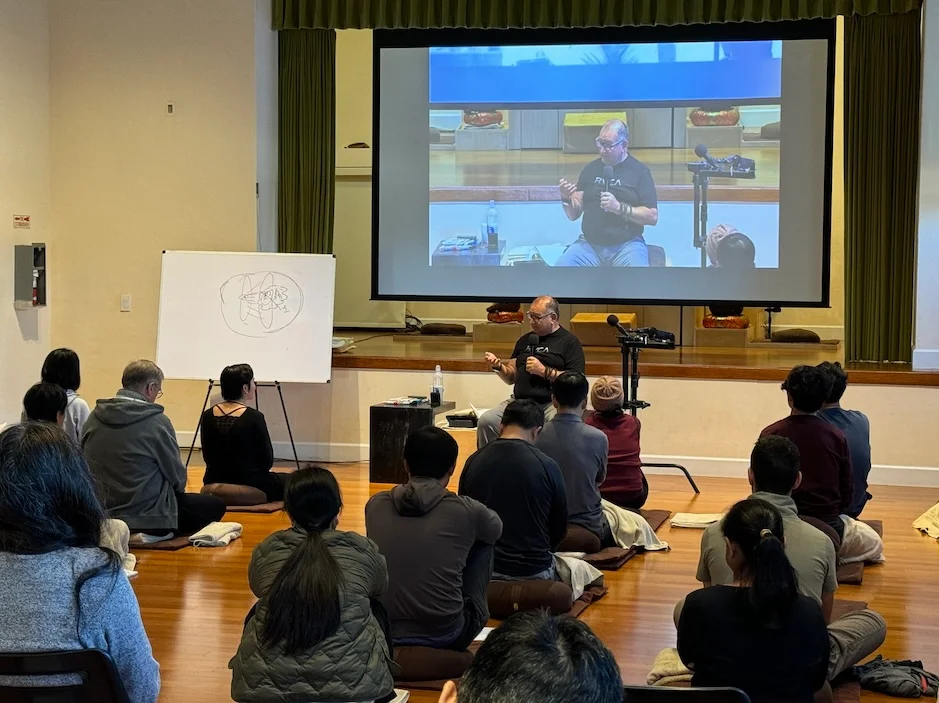
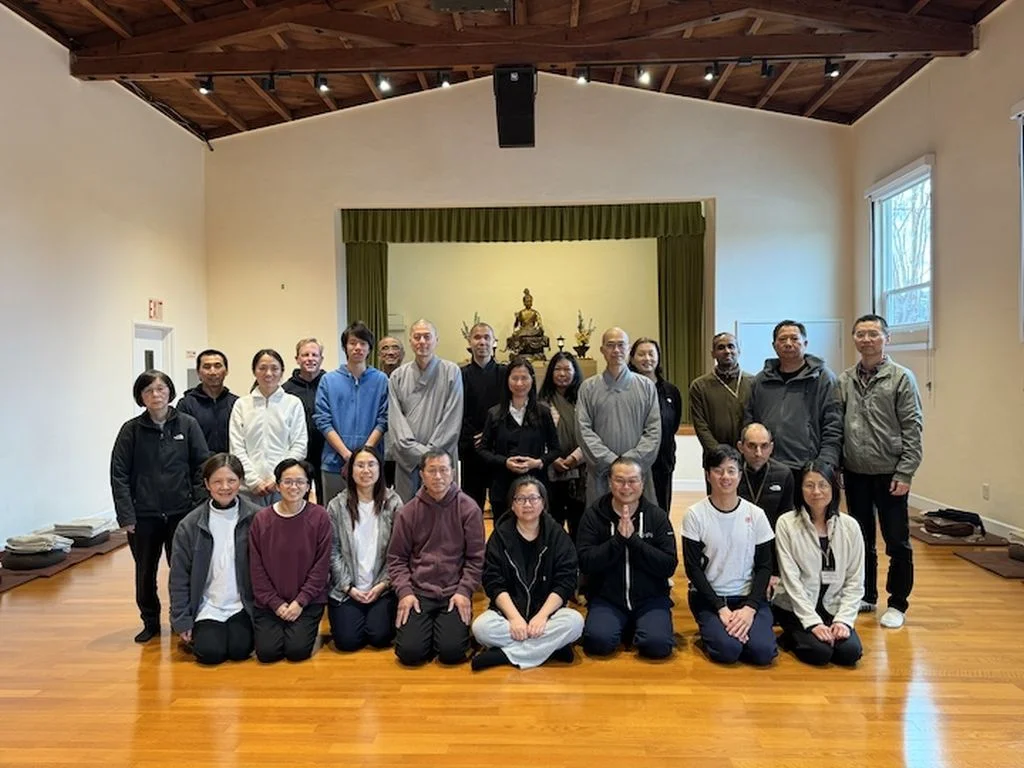
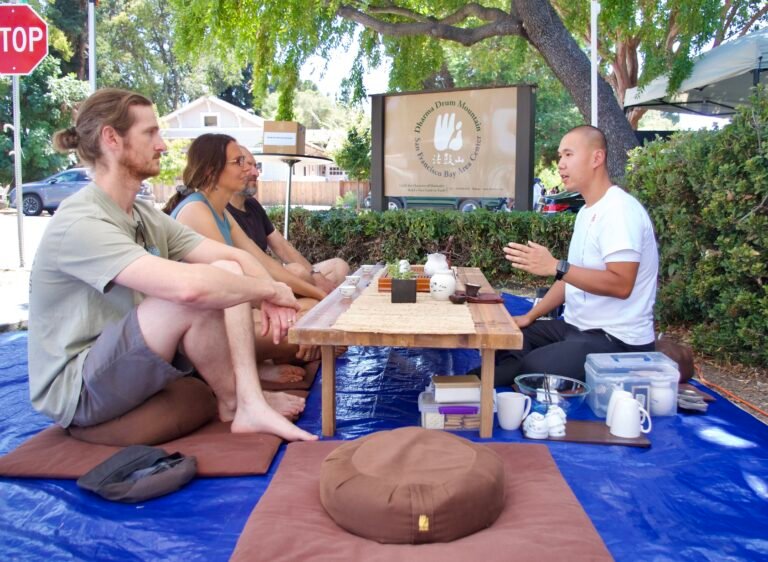
Our main center is located in Fremont, California, in the southeastern part of the San Francisco Bay Area. Our mission is to support everyone in cultivating spiritual peace and calmness, which is often missing in our modern world. We provide guidance not only in Chan meditation and group practice sessions but also a wide range of courses on Buddhism to help participants discover inner peace in their lives. Since our founding, the San Francisco Center has become a hub for spirituality and community connection, attracting those seeking spiritual growth through the exploration and practice of Buddhist wisdom together.
Dharma Drum Mountain Silicon Valley Center
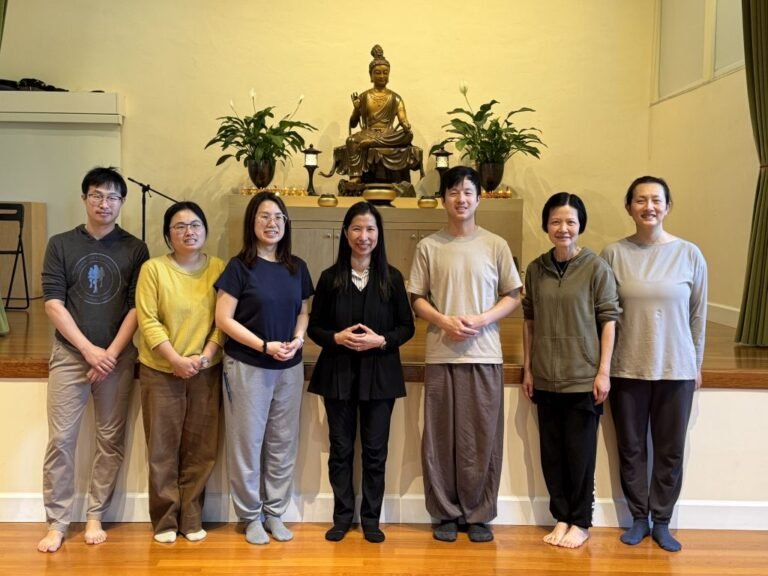
The Dharma Drum Mountain Silicon Valley Center is our new branch in Cupertino. The aim of the Silicon Valley Center is to offer a space where busy residents can rediscover their sense of freedom of body and mind, and find joy and harmony in their hectic lives.
As we expand our engagements, our new center will gradually host more events, including guidance in meditation, group meditation sessions, Chan art workshops, book clubs, and lectures on both Buddhist and casual topics. All are very welcome – stay tuned for more!